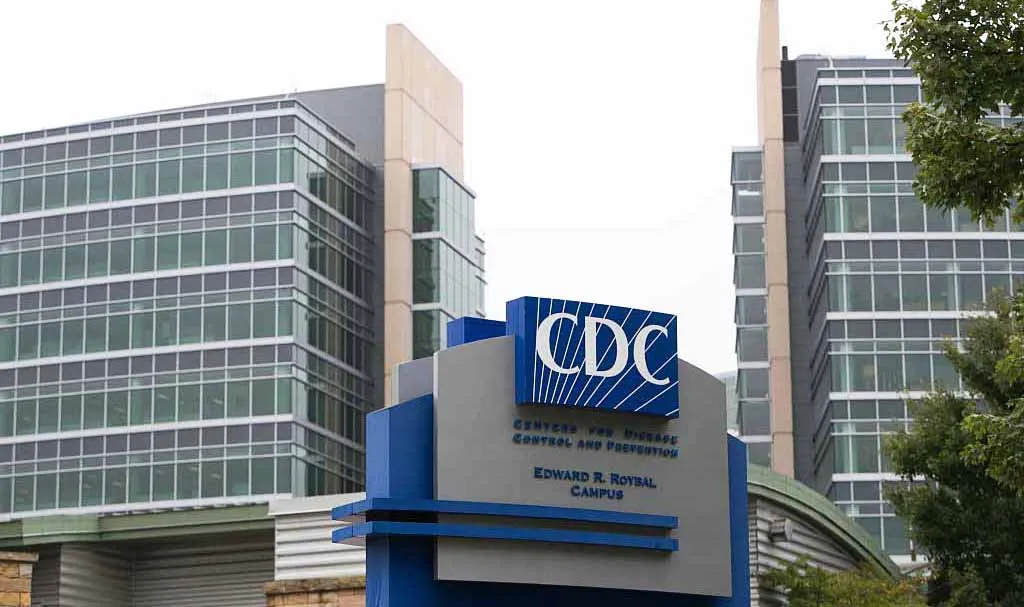
Photo: Jessica McGowan/Getty Images
On Wednesday, the Centers for Disease Control and Prevention quietly changed its web page on vaccines and autism, according to an article first reported by The Wall Street Journal.
"The claim 'vaccines do not cause autism' is not an evidence-based claim because studies have not ruled out the possibility that infant vaccines cause autism," the CDC page now says. "Studies supporting a link have been ignored by health authorities."
The website formerly said that vaccines do not cause autism.
"Pursuant to the Data Quality Act (DQA), which requires federal agencies to ensure the quality, objectivity, utility, and integrity of information they disseminate to the public, this webpage has been updated because the statement 'Vaccines do not cause autism' is not an evidence-based claim," the site said.
WHY THIS MATTERS
The Department of Health and Human Services, run by vaccine skeptic Robert F. Kennedy Jr., has launched an assessment of the causes of autism, the site said.
"Scientific studies have not ruled out the possibility that infant vaccines contribute to the development of autism. However, this statement has historically been disseminated by the CDC and other federal health agencies within HHS to prevent vaccine hesitancy," it said. "HHS has launched a comprehensive assessment of the causes of autism, including investigations on plausible biologic mechanisms and potential causal links."
The CDC web page will be updated with "gold-standard science" from the HHS assessment of the causes of autism as required by the DQA, it said.
Pediatricians and vaccine experts have long said that autism is among the most studied childhood conditions and that no credible research has ever suggested a link between it and vaccines, according to NBC News. For decades, CDC research has shown that any link between vaccines and autism has been scrutinized and debunked.
Johns Hopkins said that the combined measles-mumps-rubella (MMR) vaccine, which was approved by the Food and Drug Administration in 1971, is safe.
"The vaccine has proven safe and effective and has been widely administered around the world for decades," Johns Hopkins Bloomberg School of Public Health said in March 2025.
In 1998, a paper describing 12 children who received the MMR and later developed autism or other disorders planted seeds of doubt about the vaccine's safety, Johns Hopkins said. The paper was later retracted, and several large studies have since shown no association between vaccines and autism, but the idea persists among some groups that vaccines cause autism, Johns Hopkins said.
THE LARGER TREND
Approximately one in two surveyed parents of autistic children believe vaccines played a role in their child's autism, HHS said. Parents point to the vaccines children receive in the first six months of life – including diphtheria, tetanus, pertussis (DTaP), hepatitis B (HepB), Haemophilus influenzae type B (Hib), poliovirus, inactivated (IPV) and pneumococcal conjugate (PCV)), and one given at or after the first year of life (measles, mumps, rubella (MMR)).
"This connection has not been properly and thoroughly studied by the scientific community," HHS said.
The rise in autism prevalence since the 1980s correlates with the rise in the number of vaccines given to infants, the CDC website said. The cause of autism is likely to be multifactorial, it said, but the scientific community has ruled out one potential contributor entirely.
"For example, one study found that aluminum adjuvants in vaccines had the highest statistical correlation with the rise in autism prevalence among numerous suspected environmental causes," the CDC said. "Correlation does not prove causation, but it does merit further study."
Email the writer: SMorse@himss.org