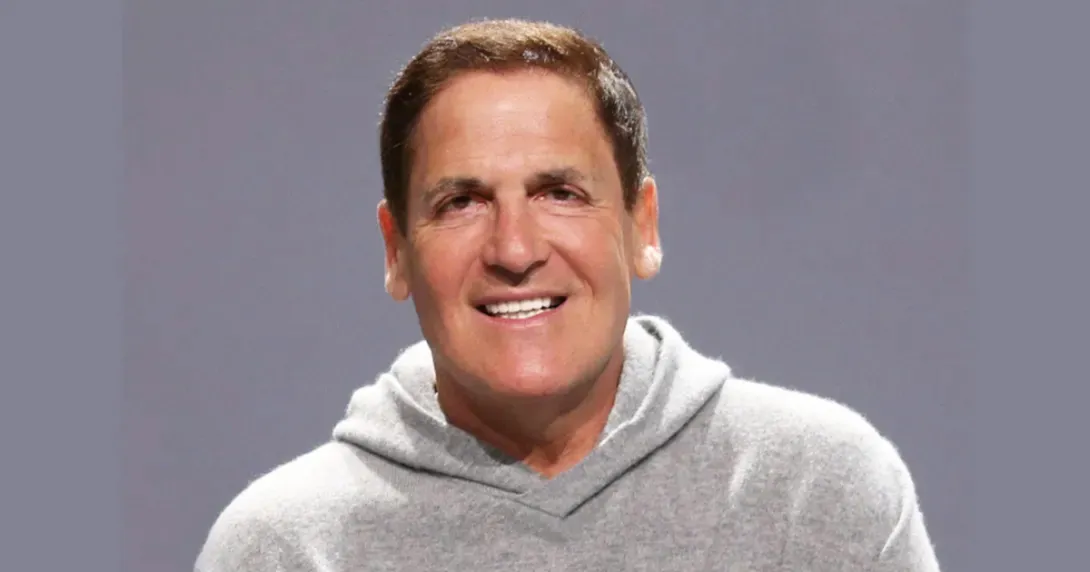
Mark Cuban
Photo: Mark Cuban Companies website
Cost Plus Drug Company cofounder Mark Cuban is backing a Senate bill that would break up large healthcare conglomerates such as UnitedHealth Group.
The bill would address vertically integrated entities from controlling both a health insurer and pharmacy benefit manager, as well as physicians, according to the bill's sponsors, Sens. Elizabeth Warren, D-Mass., and Josh Hawley, R-Mo.
In a post on X, @mcuban said, "Break up the biggest insurance companies. Make divest non insurance companies. They don't need thousands of subsidiaries. That's how they game and abuse the system and increase costs for all of us."
Healthcare costs are employers' second largest cost after payroll, Cuban said, "which is insane. It's far easier to blame AI than it is to blame healthcare costs."
Cuban's company promotes affordable prescription drugs.
UnitedHealth Group did not immediately return a request for comment.
WHY THIS MATTERS
In February, Warren and Hawley introduced the Break Up Big Medicine Act that would prohibit a parent company from owning a medical provider or management services organization and a PBM or an insurer. It would also prevent a parent company of a prescription drug or medical device wholesaler from owning a medical provider or management services organization.
The bill was referred to the Senate Committee on the Judiciary.
The three largest pharmacy benefit managers manage 80% of prescription drug claims, while just three prescription drug wholesalers control 98% of U.S. drug distribution, according to information released by the senators.
"These corporate entities are vertically integrated, meaning one company can own or control every part of the health care supply chain – from health insurance companies and PBMs to pharmacists and physicians. By controlling both the company that pays for health care services (e.g., a health insurer) and also the entity that sets the prices for those health care services (e.g., a health care provider), these conglomerates may be steering business to their own affiliates, evading laws intended to rein in corporate profiteering, or using providers they employ to boost government payments and pad their bottom lines."
This harms competition as nearly 4,000 independent pharmacies have closed since 2019 and almost 80% of physicians now work for a corporate parent, they said.
This bill extends the structural separation provisions of an earlier bill introduced by Warren and Hawley, the Patients Before Monopolies Act, to additional lines of business.
The Patients Before Monopolies Act, proposed in December 2024, was also referred to the Judiciary. It would prohibit an insurer or a parent company of a pharmacy benefit manager from owning a pharmacy business.
If passed, big insurers such as CVS Health, which owns Aetna, and UnitedHealth Group would be forced to divest of any pharmacy assets.
THE LARGER TREND
UnitedHealth Group and its subsidiary Optum are already under investigation by the Department of Justice for alleged anticompetitive behavior for Optum Health's acquisition of physician groups, among other matters.
Investigators are also looking into whether UnitedHealthcare favored Optum-owned groups in its contracting practices and whether Optum's ownership of providers presents challenges to health insurers that are rivals to UnitedHealthcare.
Email the writer: SMorse@himss.org