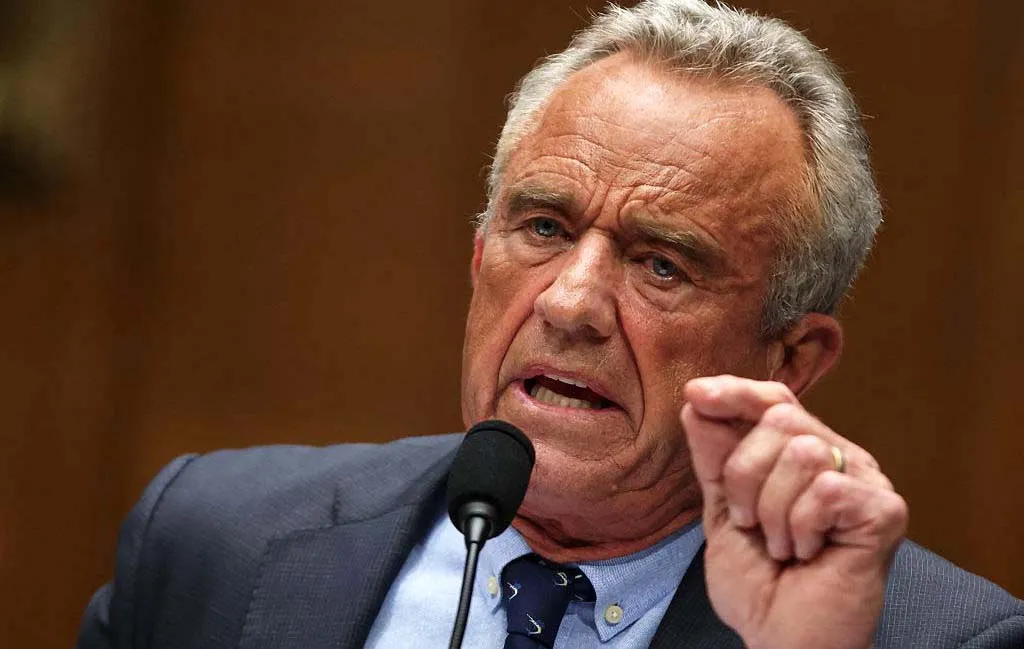
Health and Human Services Secretary Robert F. Kennedy, Jr.
Photo: Samuel Corum/Getty Images
Ten health technology companies have pledged to help states prepare for and implement Medicaid community engagement and work requirements, according to an announcement from the Centers for Medicare & Medicaid Services.
The 10 tech companies have told CMS they intend to offer states more than $600 million in no-cost and significantly discounted technology products and services to support implementation while accelerating broader modernization of Medicaid systems, CMS said.
Each has an existing Medicaid eligibility and enrollment contract with states. The voluntary commitments are expected to generate significant savings for states and taxpayers and improve beneficiary experience, CMS said.
The companies are Accenture, Acentra Health, Conduent, GDIT, Deloitte, Gainwell, Maximus, Curam by Merative, Optum and RedMane.
"Gainwell is proud to join the Centers for Medicare and Medicaid Services and our industry peers in supporting states as they implement Medicaid community engagement requirements. This pledge reflects our commitment to advancing federal and state policy goals, modernizing Medicaid systems through purposeful public–private collaboration, and addressing fraud, waste, and abuse," Gainwell said by statement. "The Gainwell Community Engagement Verification solution combines decades of Medicaid and verification expertise with modern AI technology to help states meet federal requirements quickly and efficiently, strengthen member engagement and reduce administrative burden. The solution is designed to flexibly meet states where they are. It is offered at a low price point, and built for rapid deployment and seamless integration."
CMS said it is also taking steps to help states access additional methods for purchasing and procuring technology solutions. In partnership with the General Services Administration (GSA), CMS is working to enable vendors to obtain a GSA Schedule, allowing states to more quickly procure the technology they need.
WHY THIS MATTERS
States are required to implement work and community engagement requirements by Jan. 1, 2027.
The Medicaid work and community requirements are being enacted under President Donald Trump’s Working Families Tax Cut (WFTC) legislation.
CMS said the requirements have the potential to empower adult Medicaid beneficiaries through employment, education, volunteering or job training.
CMS issued guidance to states in late 2025 providing an overview of these requirements.
Since enactment of the law, CMS has worked with states and conducted outreach to technology companies to better align eligibility and enrollment system changes, expand testing environments and support automated, consent-based data verification for income, education and related activities.
These efforts have included testing beneficiary engagement tools and developing an open-source tool (EMMY), which streamlines eligibility determinations, provides access to data sources for verification (EMMY APIs) and offers states free technical resources to strengthen readiness for community engagement.
CMS has also encouraged adoption of innovative tools to support outreach, community-based referral coordination and secure data sharing, to minimize administrative burden for both agencies and beneficiaries.
THE LARGER TREND
The Big Beautiful Bill Act mandated work or other community service requirements for Medicaid coverage.
States were concerned about having a short timeline to implement the requirements, according to a KFF study.
State Medicaid officials said they would have to make significant changes to eligibility systems to be able to verify compliance with work, school and other qualifying activities. Long lead times are typically needed to design, procure and build new systems, they said.
CMS has also worked to facilitate a series of in-person and virtual demonstration sessions for states to engage with a number of technology vendors that provide solutions for eligibility and enrollment, automated data verification, and coordination and connections to employment, education, job training and community activities.
ON THE RECORD
“Community engagement provides dignity and purpose,” said Health and Human Services Secretary Robert F. Kennedy, Jr. “Thanks to [CMS Administrator] Dr. [Mehmet] Oz’s leadership, we’re one step closer to delivering President Trump’s vision of bringing every able-bodied adult on Medicaid into the workforce and other cornerstones of society.”
“From the outset, our focus has been on helping states implement these requirements efficiently while supporting new innovations in Medicaid that improve the beneficiary experience,” said Dan Brillman, director of the Center for Medicaid and CHIP Services. “We applaud vendors for their voluntary commitments and discounting their solutions, providing states with additional options as they plan their implementation and modernize their Medicaid systems.”
Email the writer: SMorse@himss.org