Analytics

David Lareau, Medicomp Systems CEO, explains that deterministic, rules-based AI models can validate the probabilistic, often inconsistent outputs that LLMs deliver to avoid errors in clinical documentation.

AI technology has evolved so quickly that even healthcare staff with no technical expertise can now build custom agents to solve clinical or back-office challenges, explains Kenneth Harper, Dragon general manager at Microsoft.

Elena Sini, HIMSS board chair and group CIO at GVM Care and Research, says national coordination and European Commission funding are enabling Italy's shift from fragmented regional healthcare to a single digital strategy.

According to Sumit Nagpal, Cherish CEO, the company's smart device detects patient vitals such as heart rate and uses AI to track daily patterns, surfacing subtle signals of decline so clinicians can proactively manage care.
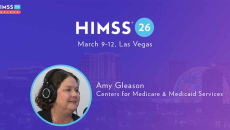
CMS envisions frictionless data sharing in which patients can use biometrics to access their records. They can then transfer them using a QR code, explains Amy Gleason, administrator at U.S. DOGE Service and CMS strategic advisor.
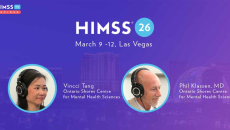
Vincci Tang and Dr. Phil Klassen of Ontario Shores Centre for Mental Health Sciences talk about how using data to anticipate and manage behavioral health problems in near real time helped the health system win a Davies Award.
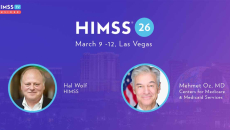
Dr. Mehmet Oz, CMS administrator, tells HIMSS CEO Hal Wolf that the agency is modernizing its billing platform to keep pace with today's digital health ecosystem and aims to recruit talent and partners to bring advanced tech and AI into everyday care.

Aga Khan University combined a decade of Kenyan healthcare data so it can be mined to help provide more preventive care, says Farhana Alarakhiya, 2026 Changemaker Awardee and the university's chief data innovation officer.

Even with advances in governance and workforce development, global health systems have achieved about 65% of the key indicators needed for AI readiness, explains Anne Snowdon, HIMSS' chief scientific research officer.
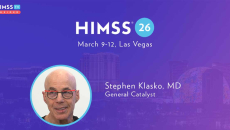
Dr. Stephen Klasko, executive in residence at General Catalyst, recommends that health systems shift from treating illness to proactively collaborating with people so they can live healthier lives and better manage chronic conditions.