Artificial Intelligence
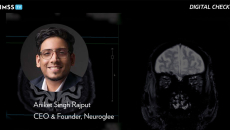
Neuroglee's cognitive care at home technology helps patients get the right care plan, says founder and CEO Aniket Singh Rajput.
Most AI adoption requires healthcare organizations to have a certain level of digital maturity, says Professor David Lowe, clinical director, Health Innovation with the Scottish government.
Mass General Brigham has a digital team strategy with one focus on reducing the documentation burden, says CIO Dr. Adam Landman.

Talkspace pioneered text therapy and uses machine learning algorithms to identify patterns in language that could signal an alert, says CTO Gil Margolin.

AI promises automation and augmentation, but risks include input poisoning into large amounts of data.

Geisinger medical director of AI Dr. Aalpen Patel describes the role of AI in healthcare and some of the health system's initiatives, including an effort that seeks to prioritize eligible patients who are overdue for colorectal screenings.

Such an approach, the group said, would allow oversight organizations to tailor their regulations to the particular risks linked to AI.

Algorithms and large language models are already transforming healthcare processes across many use cases. Here's how some pioneering health IT leaders are using AI today, and how they're planning for the future.

Todd Gottula, president and cofounder of Clarify Health, says obtaining and cleansing data assets can drive better outcomes, but the presentation matters almost as much as the data itself.

As cyberattacks become more sophisticated, endpoint protection and staff training are key to preventing breaches, says Renee Broadbent, CIO and information security officer at SoNE Healthcare.