Business Intelligence
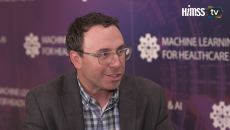
Machine learning can help organizations learn from data more quickly and intuitively, says Leonard D'Avolio, founder and CEO of Cyft.

SPONSORED
 |
09:08 am |
July 03, 2019
|
09:08 am |
July 03, 2019
|
09:08 am |
July 03, 2019
Kevin Shah, head of Enterprise New Business at Fujifilm Europe, explains how automating some processes can increase the chance of better outcomes for patients while reducing clinicians' workloads.

Rahul Goyal, MD, physician informatics lead at Mediclinic Middle East in the UAE, says EHR should be a useful tool as a "sidekick," not the be-all, for engaging physicians.
The money will help Atlanta University Center Consortium Data Science Initiative improve education in healthcare analytics at historically black colleges and universities.
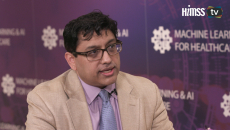
Badrul Husain, CEO of Infolytx, discusses how AI is gaining real traction across healthcare and the challenges ahead.
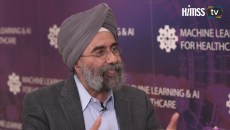
Blockchain can help eliminate "redundant work, rework and reconciliation," says Tej Anand, professor of practice at the University of Texas' McCombs School of Business.

Rob Wellen, regional vice president at KenSci, discusses how his company is helping providers operationalize machine learning and artificial intelligence.
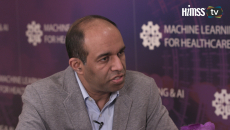
Srinivasan Suresh, MD, VP at UPMC Children's Hospital of Pittsburgh, says that it starts with engaging the clinicians and having a team to standardize care to reduce variation for measurable changes.

You don't just jump into advanced analytics and machine learning. There's a natural process, says Michael Schwarz, executive director of IS at Indiana University Health System.
The program is intended to assist drug supply chain stakeholders in identifying and tracing certain prescription drugs.