Digital Health
Oklahoma Heart Hospital went digital 22 years ago, a move that coordinated the EHR between the hospitals and the clinics for unified care and a better patient experience, says Oklahoma Heart Hospital CIO David Miles.
Oklahoma Heart Hospital, a two-hospital physician-owned cardiovascular system, went all digital in 2002 to focus on workflow, not paper shuffling, says CIO David Miles.

Artificial intelligence makes efficient use of a massive amount of data, but it can also create deep fake technology, says Dr. Benoit Desjardins, professor of radiology at the University of Montreal.

The ability to use AI to get past cyber defenses will cause a reset on the tools used to secure healthcare networks, says cybersecurity expert Richard Staynings of the University of Denver.

More than 90% of messages can be handled by virtual nurses, which eases workforce shortages and burnout, says Anurag Mehta, CEO of Omega Healthcare.

oVRcome can treat the 80% of people who have an anxiety disorder who cannot access a physical location, through Virtual Reality Exposure Therapy on a smartphone, says founder and CEO Adam Hutchinson.
Medical illustrators need to take complex information and edit out what is not the physician's focus, such as an injury. AI has not learned proper cellular anatomy, says David Bolinsky, producer of The Inner Life of the Cell and E.mersion Studios CEO and creative director.
Sense, emotion-sensing eyewear, unlocks real-world data to give us insights into our emotional health and even diet, representing the next pillar of health, says Steen Strand, CEO of Emteq Labs.
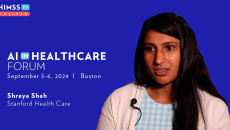
Stanford Health Care uses AI-generated replies to in-basket messages and has an ambient AI scribe to reduce clinician burden, but does not use AI for clinical decision support, says medical informatics director Dr. Shreya Shah.
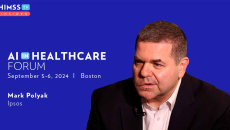
AI offers consumers easier access to diagnoses, treatment plans and cost estimates, with 87% being fine with the tech for clerical work; 50% being comfortable with its use in assisting physicians; but only 14% wanting AI to do a diagnosis on its own, says Mark Polyak, president of analytics at Ipsos.