Medical Devices
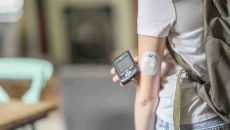
The pathway will allow the evidence generated for FDA review to support Medicare coverage decisions.

When wearables detect disease risk factors, American College of Cardiology Chief Innovation Officer Dr. Ami Bhatt says vendors must help guide users into care pathways so they're not left navigating healthcare alone.

Through her work with the Health Sector Coordinating Council, McLaren Health Care's Samantha Jacques says she helps bridge public and private healthcare sectors with guidance on protecting connected clinical environments.

According to Sumit Nagpal, Cherish CEO, the company's smart device detects patient vitals such as heart rate and uses AI to track daily patterns, surfacing subtle signals of decline so clinicians can proactively manage care.
Dr. Amit Zabtani, CustoMed's cofounder and CMO, discusses how the company turns scans of a patient's body into precisely tailored instruments that help surgeons perform more efficiently.
Dave Rosa, NeuroOne CEO, explains how the company's robot-placed electrode brain implants, combined with its OneRF ablation system, can help prevent seizures in epilepsy patients and treat motor disorders.
Dr. Mark Zhang of the U.S. Department of Veterans Affairs says six facilities across the country create 3D-printed devices, surgical models and even patient-derived bone grafts that improve care for veterans.

Epic's Trevor Berceau and Sutter Health's Dr. Richard Milani discuss how their organizations linked FDA-approved monitoring devices directly to MyChart to let chronic care patients send data easily to their charts between visits.

When integrated with the EHR, automated technology upped billing from 2,500 remotes per month to 3,800 remotes per month, says Sallie Gustafson, RN, director of Medical Affairs at Murj.
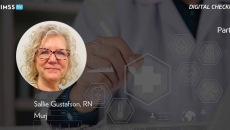
Bill too frequently and CMS gives denials and physicians find it impossible to know the right time, says Sallie Gustafson, RN, director of medical affairs at Murj.