Risk Management
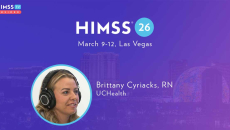
UCHealth developed an AI sepsis-detection model but struggles to educate thousands of nurses across 15 hospitals to use and trust its outputs, says Brittany Cyriacks, clinical informatics program director.

Risk-based contracts are complex, but AI helps weed through the data to show the direct financial impact, says Brian Overstreet, CEO of Arbital Health.
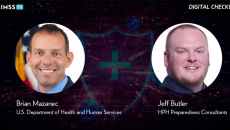
RISC Toolkit 2.0 includes a dedicated cybersecurity module to help health systems assess risks and benchmark readiness, say Brian Mazanec of HHS Administration for Strategic Preparedness and Response and Jeff Butler of HPH Preparedness Consultants.
HIMSS26 interviews revealed that, for attendees, AI represents both a powerful tool to help healthcare organizations weather financial headwinds and a serious cybersecurity concern.
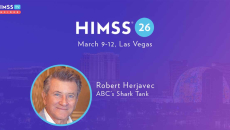
While AI is increasing the rate of cyber incidents, Robert Herjavec, cybersecurity expert and star of ABC's "Shark Tank," says 85% of ransomware attacks still originate from email or MFA breaches.
All Covered's Danielle Morrison says the costs of recovering from healthcare IT outages add up quickly as staff lose productivity, appointments must be rescheduled and business operations slow down.

Hospitals have more uninsured patients or those covered by government programs with higher volumes not translating into stronger financial results.
Erik Decker, Intermountain Health CISO, discusses his upcoming HIMSS26 panel about how healthcare leaders can better manage their organizations' risk as systems become more interconnected.

As cyberattacks on rural hospitals increase, Clearwater's Jackie Mattingly recommends that leaders establish clear governance, simplify security tools, and plan for attack prevention and response and recovery.

Michael Clark, president of OnPoint Healthcare Partners, says healthcare practices must keep humans in the loop to monitor AI agents' ability to complete tasks as well as to evaluate agents' final output for accuracy.