Workforce
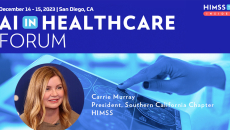
Hospitals within the HIMSS Southern California chapter want to know how to create and safely implement AI, with more education expected to follow from the HIMSS AI forum, says Carrie Murray, president of the HIMSS Southern California chapter.
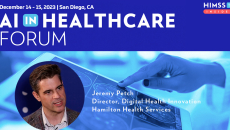
Hamilton Health Sciences is focused on clinical AI at the bedside as a powerful tool, as long as it's in partnership with clinicians, says Jeremy Petch, director of digital health innovation.

Cigna Group CFO Brian Evanko will now also serve as president and CEO of Cigna Healthcare, one of several moves announced.

Taking less vacation and working while on vacation were associated with higher mean emotional exhaustion and burnout.

Spearheaded by Bloomberg Philanthropies, the initiative seeks to graduate students directly into high-demand healthcare jobs.
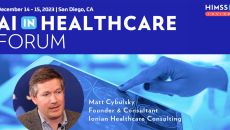
AI adds a capability to identify when interventions are necessary and to get an idea of the health and needs of a population, says Matt Cybulsky, founder of Ionian Healthcare Consulting.

The New Hampshire Hospital Association is calling for patients to mask in certain areas and be mindful of hygiene.
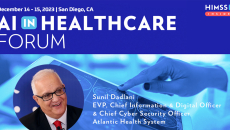
At HIMSS AI in Healthcare Forum, one session about Atlantic Health System's AI rollout focused on a watershed moment of smart machines and humans integrating, says Sunil Dadlani, EVP and chief information and digital officer.

For women with lower levels of education, some healthcare professions are seeing the wage gap widen.
Beckman Coulter uses TriageGo, AI and machine learning to recommend triage acuity, says Sophia Henry, clinical consultant for the company.