Videos

With healthcare at a turning point when it comes to using data analytics, providers need AI as a core capability, says Tushar Mehrotra, senior vice president of analytics at Optum.
Ver2 Digital Medicine CEO Brian de Francesca talks about how telemedicine has evolved and efforts to provide medical care to refugees in camps using a cloud-based EHR built on blockchain.
Rohit Ghosh, founding member of Qure.ai, discusses deploying AI and machine learning to radiology and examples of success stories.
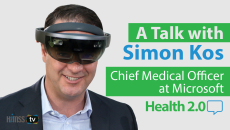
Microsoft Chief Medical Officer Simon Kos sees a need to improve healthcare and so the software giant is focusing on such areas as AI, population health, public cloud, precision medicine and virtual services.
Hospitals have to make manufacturers realize that prospective clients are buying based on security, says Parham Eftekhari, executive director of the Institute for Critical Infrastructure Technology.
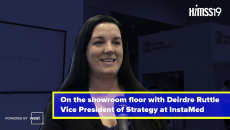
Deirdre Ruttle, vice president of strategy at InstaMed, says that patients need a better experience when paying medical bills.
Brian Eastwood, content strategist at ReviveHealth and a HIMSS19 social media ambassador, says hospitals are deploying the tools in patient rooms to handle low-priority tasks like turning on the TV or closing shades.
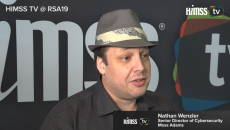
The idea that AI needs no management is a myth, says Nathan Wenzler, senior director of cybersecurity at Moss Adams. Instead, smart people must be involved to make decisions about the data and findings.
David McSwain, interim CMIO at Medical University of South Carolina, says telehealth technology has evolved to the point where virtual visits can now include entire care teams in ways that just aren't possible when clinicians are using phones.
Andrew Pendergast, VP of product at ThreatConnect, talks about providing external threat intelligence as well as skepticism about AI.