HIMSS TV
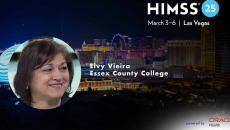
Essex County College worked in partnership with HIMSS to help students earn a data science degree that leads to higher-paying healthcare IT jobs, says Elvy Vieira, dean of Community, Continuing Education and Workforce Development.

Kyruus Health's AI-powered tool simplifies the search for the 70% of patients who are looking online for care and the 50% who are deciding between three or more sources, says Senior Director of Clinical Services Gen Conlin.

At HIMSS25, Director of Licensing and Communications Joan Webley has found partners to put the mission into action by offering a first response to natural disasters and wars, not just with doctors and medicines but with clinics.
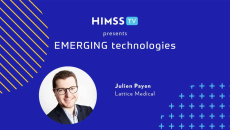
Lattice Medical's Mattice is a 3D-printed structure that regenerates breast tissue after a mastectomy, says CEO and cofounder Julien Payen.

Ultimately the question is not one of spending, but how we allocate care for ourselves and in this world, data is everything, says Dr. Don Rucker, chief strategy officer at 1upHealth, who is the former National Coordinator for Health Information Technology.

Dr. Sarah Hoffe, interim chair of GI oncology at Moffitt Cancer Center, says she saw it change a 68-year old cancer patient’s life when the claustrophobic MRI procedure was simulated.

The penalty for non-compliance is the loss of tax-exempt status for a not-for-profit hospital for a year, says Hal Andrews, CEO of Trilliant Health.

The main theme of a HIMSS25 panel was not around tech, but was about the culture of innovation making the difference, says Edward Marx, CEO of Marx Advisory who is part of the HIMSS CIO Connect program.
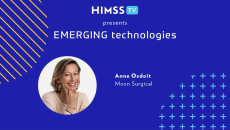
Maestro is a surgical assistance platform designed for minimally invasive soft-tissue procedures such as laparoscopic operations, says Anne Osdoit, CEO of Moon Surgical.

Digital infrastructure protects data and the center is there for the community during a time of fear, anxiety and uncertainty over funding freezes and sustainability, says Gabriel Garcia-Lopez of the Los Angeles LGBT Center.