Analytics
The past five to 10 years have brought a major shift in how healthcare organizations have been forced to think about their cybersecurity.
TEFCA has potential to remove a lot of the friction around what it takes to achieve interoperability, a HIMSS23 panel said.
Modernizing data means shifting it from an asset to a utility, to ensure it's usable for patients, providers and payers, a HIMSS23 panel said.
HDUs enable specific, defined use cases, with extra protections to ensure patient privacy and protection.
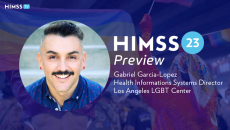
LGBTQ+ care can be enhanced via data collection, according to Gabriel Garcia-Lopez, director, health information systems, at the Los Angeles LGBT Center.

The research looked at economic instability rather than healthcare instability, says Brian Urban of FinThrive.

These attacks are flooding targeted networks and servers and threatening to shut sites down, rendering them inaccessible to clients.

The system was able to generate $2.5M in net new revenue as the clinical insights more fully capture patients' disease burdens.

The agencies came to this conclusion after a meeting of the Social Security and Medicare Boards of Trustees, which released its annual reports.
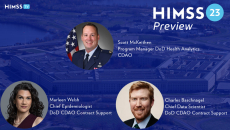
Department of Defense Chief Digital and Artificial Intelligence Office (CDAO) members Scott McKeithen, Marleen Welsh and Charles Baschnagel preview their panel at HIMSS23 on the ways biosurveillance helps public health officials during pandemics.