Analytics

With the increasing volume and complexity of data in clinical situations, artificial intelligence can help support and guide care providers' decision-making processes, says Dimitri Fane, director of product management of TrakCare at InterSystems.
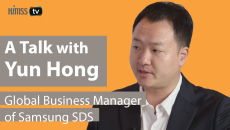
Yun Hong, Global Business Manager, Samsung SDS, says his company's wearable S-Patch ECG monitor collects and automatically uploads data to the cloud, which makes it is easier to use than conventional technology deployed for the same purpose.
Increasingly large, complex data sets, and a growing need to reduce increasing costs, are driving market growth.

Emily Vaughn, product development director of Change Healthcare, and Tim Dunlevy, VP of engineering at PokitDok, discuss what they believe will be the first use cases for blockchain as well as the process of going from private to public blockchain networks.

The key to making the most of blockchain technology is to address the fragmentation of data, says Abel Kho, director of the Center for Health Information Partnerships at Northwestern University and co-founder of Health Data Link.
Stakeholder participation, real-time transparency and emerging use cases will likely help blockchain permeate healthcare over the next several years.
The Physician Misery Index has increased from 3.78 to 3.94 since 2015 despite increasing awareness of the prevalence of burnout.
The purpose of benchmarking in healthcare is to improve efficiency, quality of care, patient safety and patient satisfaction; AI can help.
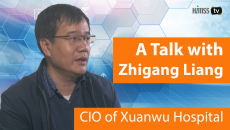
Xuanwu Hospital, Capital University of Medical Sciences, CIO Zhigang Liang outlines what hospitals need to understand before embarking on a journey toward Stage 7 on the HIMSS Analytics Electronic Medical Record Adoption Model (EMRAM).
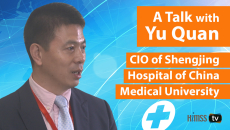
With 11 hospitals validated at Stage 7 on the HIMSS Analytics EMRAM, China has been making great strides toward digitizing healthcare. Yu Quan, CIO at China Medical University's Shengjing Hospital, which achieved Stage 7, talks about the next steps.