Digital Health

As clinicians' administrative burdens continue to increase, Innovaccer CEO and cofounder Abhinav Shashank says the company's recent publication, Autonomous Healthcare, addresses how AI can give them more time with patients.

Mass General Brigham's Esther Kim discusses the health system's pilot process, from vetting emerging technologies and aligning them with strategic goals to the evaluation that determines whether the tool will be scaled.
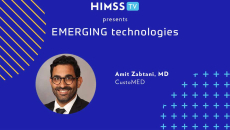
Dr. Amit Zabtani, CustoMed's cofounder and CMO, discusses how the company turns scans of a patient's body into precisely tailored instruments that help surgeons perform more efficiently.

The intelligent automation will deliver more timely decisions that reduce delays and improve access to care, Optum says.

GE HealthCare's Sergio Calvo explains how theranostics uses molecular imaging to confirm a cancer target, deliver radiation therapy directly to tumor cells, which helps protect healthy tissue, and track post-therapy results.

Alexander Richter of the SciTech Innovation Hub at SciTech Scity says the company seeks out startup technology that can address health systems' pain points and launches pilots to demonstrate the tools' usability, efficacy and sustainability.

Administrators are three times more likely to be involved in AI policy than clinicians, suggesting staff is using AI without clear guidance.

As the number of mental health AI chatbots grows, Numerof and Associates' Michael Abrams warns that without rigorous testing and validation these largely unregulated tools may pose real risks to patients.

AdventHealth, Baylor Scott & White, Boston Children’s, Cedars-Sinai and HCA Healthcare are among health systems that have signed on.

Epic's Trevor Berceau and Sutter Health's Dr. Richard Milani discuss how their organizations linked FDA-approved monitoring devices directly to MyChart to let chronic care patients send data easily to their charts between visits.