Artificial Intelligence
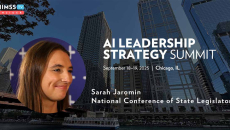
The National Conference of State Legislatures' Sarah Jaromin talks about how its public databases track every state's AI legislation, helping lawmakers stay informed as states debate ethical healthcare AI deployment.
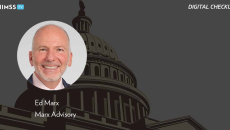
For AI adoption, healthcare board members need to be users of AI, they need to determine the organization’s risk tolerance and there should be strategic alignment with the system’s mission, says Edward Marx, CEO of Marx Advisory.
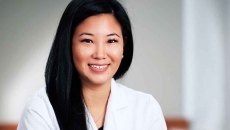
Just as the FDA approves medical devices, there needs to be a pathway and a reviewing board to verify whether an AI model is credible, says Pluto CEO.
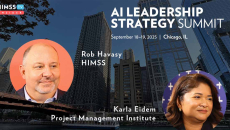
Meeting budgets and deadlines may not reflect the scalability and viability of AI projects, according to HIMSS' Rob Havasy and PMI's Karla Eidem; leaders must align stakeholders, own outcomes and adapt quickly.
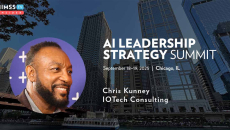
The Chief AI Officer is the latest link between IT and clinical care, as CMIOs were needed 20 years ago during the push to EHR adoption, says Christopher Kunney, a partner at IOTech Consulting.
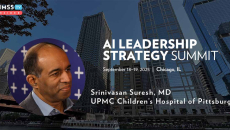
According to Dr. Srinivasan Suresh of UPMC Children's Hospital, an AI tool developed in-house is hoping to identify sepsis earlier in patients, and others are being tested for use in autism, ADHD and diabetes education.
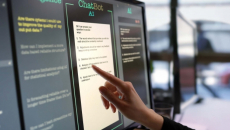
The goal is to expand Machinify’s AI reach to a broader range of clients, including government programs.
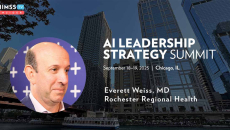
Rochester Regional Health recently completed a pilot of an ambient digital scribe with 300 providers that will be implemented in the health system, says Dr. Everett Weiss, medical director for health informatics.

The AI platform goes through unstructured medical records to surface eligible trials, allowing clinical research teams to move faster.
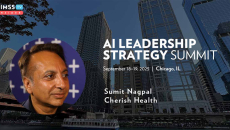
Cherish Health CEO Sumit Nagpal talks about how the company's radar-based monitoring system uses AI to detect daily patterns and falls, allowing seniors independence while giving families peace of mind.