Artificial Intelligence

Providers know instantly what’s covered, payers receive more comprehensive claims and patients know their coverage before leaving the doctor's office, Optum says.

It's becoming more critical for health systems to tie together analytics and artificial intelligence, says Karthik Raja, chief analytics and AI officer at Ascension.
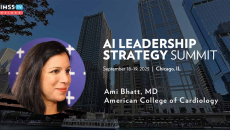
Beyond administrative efficiencies, AI can help clinicians get the information they need as a strategy for their patient priorities, says Dr. Ami Bhatt, chief innovation officer at the American College of Cardiology.

The program has enabled early intervention for high-risk patients since its inception, system says.

The goal is to develop AI-based technology that can assist doctors in real time during heart procedures.
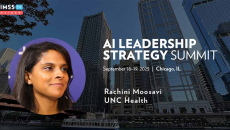
Smaller scale workflows and ambient technologies are big everyday wins and the next move is toward clinical summarization, says Rachini Moosavi, chief analytics officer for UNC Health.
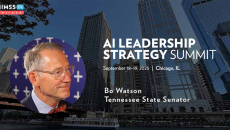
Bo Watson, a Tennessee state senator and physical therapist, says that, while AI tools can guide clinical decisions and increase operational efficiency, the ultimate responsibility for care rests with clinicians.

The collaboration gives tech startups the ability to to demonstrate value directly with clinicians.

The integration of One Medical to technology-driven pharmacy fulfillment strategically bypasses high overhead such as staffing.

Julie Frey, VP of product at Wolters Kluwer Health, explains how its recently released UpToDate Expert AI brings generative AI to clinicians at the point of care, offering diagnostic and treatment guidance.